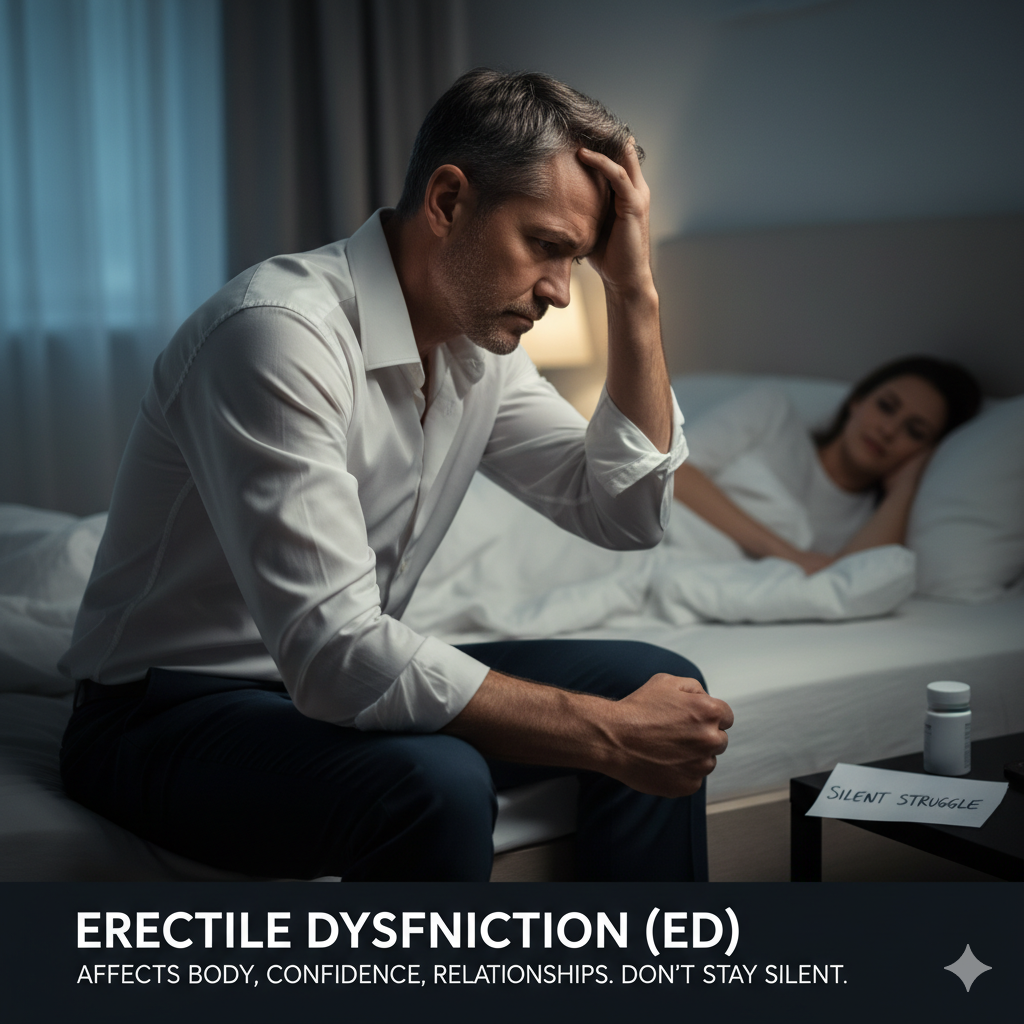
Understanding The Silent Struggle Men Face. Let’s face it—men don’t like to talk about sexual problems. The fear of judgment, shame, or embarrassment keeps many silent even when they’re battling a serious sexual disorder. But silence can be more dangerous than the problem itself. Erectile Dysfunction (ED), one of the most common yet least discussed men’s health issues, affects not just a man’s body—but his confidence, relationships, and mental well-being.
Imagine that you’re in the moment, the spark is there, but your body doesn’t respond. That instant of frustration can turn into anxiety, and over time, it becomes a cycle of doubt. This isn’t just a physical sexual difficulty—it’s an emotional weight that many carry quietly. Studies show that millions of men worldwide experience impaired sexual function, but few seek help due to stigma or misinformation.
Here’s the truth: Erectile Dysfunction is not a sign of weakness. It’s not just “getting older.” It’s a medical condition—one that can be treated, managed, and often reversed with the right steps. Understanding the underlying causes and solutions can change your life completely.
This post aims to shed light on this often-misunderstood sexual disorder, explore its causes, emotional effects, and most importantly, provide practical recommendations and supplements that can help men regain control of their sexual health. Let’s break the silence and bring back confidence where it belongs.
What is Erectile Dysfunction? A Straightforward Look
At its core, Erectile Dysfunction (ED) is the consistent inability to achieve or maintain an erection sufficient for sexual intercourse. It’s one of the most recognized sexual problems among men, and yet, it’s often surrounded by myths. ED isn’t always permanent or irreversible—it can happen occasionally due to stress or fatigue, but when it becomes frequent, it signals a deeper issue within the body or mind.
The process of achieving an erection involves a complex interaction between the brain, hormones, nerves, muscles, and blood vessels. When one or more of these elements don’t function properly, it can result in impaired sexual function. This is where Erectile Dysfunction steps in. It can be caused by poor blood circulation, hormonal imbalances, psychological stress, or certain medical conditions such as diabetes or hypertension.
ED is not just a sexual disorder—it’s often a warning sign of other underlying health concerns like cardiovascular disease. Think of it as your body’s early alarm system, telling you something is off. That’s why addressing Erectile Dysfunction early can do more than restore your sex life—it can also protect your overall health. Unfortunately, many men ignore the symptoms or turn to quick fixes without understanding the cause. The good news? With the right approach—medical, psychological, and lifestyle-based—most cases can be managed effectively.
Why Erectile Dysfunction Isn’t Just a Sexual Problem
When most men hear Erectile Dysfunction (ED), they immediately think it’s just about performance in bed. But that’s far from the truth. ED is a sexual disorder that affects multiple layers of a man’s life—physically, emotionally, mentally, and even socially. The inability to maintain an erection can quickly evolve into a bigger issue, influencing your confidence, relationship satisfaction, and overall happiness.
ED is often an indicator of more serious health problems lurking beneath the surface. Conditions such as diabetes, heart disease, high blood pressure, and obesity can all contribute to impaired sexual function. In many cases, ED is the first visible symptom of these underlying illnesses. That’s why doctors often call it the “canary in the coal mine” of men’s health—it signals that something deeper might be wrong. This is not to say anyone who experiences ED maybe suffering or will suffer from the above diseases.
Beyond the physical aspect, sexual problems like ED can eat away at self-esteem. Many men feel inadequate or less masculine, which can lead to withdrawal from intimacy, avoidance of partners, and even depression. The anxiety that comes with anticipating failure can make the problem worse—a psychological trap known as performance anxiety.
Ignoring Erectile Dysfunction doesn’t just harm your sex life; it impacts your emotional well-being, your relationship stability, and your physical health. The sooner men start viewing ED not as a weakness but as a signal to take action, the quicker they can reclaim control of their body and confidence.
Sexual Disorder vs. Sexual Difficulty: What’s the Difference?
It’s easy to confuse a one-time sexual difficulty with a chronic sexual disorder. However, understanding the distinction can help men address the problem correctly. A sexual difficulty is usually temporary—caused by stress, fatigue, or momentary anxiety. Maybe you had a tough day at work, or you’re mentally distracted. These instances are common and don’t necessarily mean you have Erectile Dysfunction.
A sexual disorder, on the other hand, is persistent. If you consistently find it hard to achieve or sustain an erection for more than three months, it’s time to take it seriously.
It’s important to remember that ED doesn’t define your worth or masculinity. It’s a medical condition—just like high blood pressure or diabetes—that can be treated. Emotional healing starts when men open up about their experiences and seek support, whether through therapy, lifestyle adjustments, or supplements that enhance sexual function.
Lifestyle Factors that Lead to Erectile Dysfunction
You might be surprised to learn how much your daily habits affect your ability to perform sexually. Things like poor diet, lack of exercise, excessive alcohol, smoking, and chronic stress all contribute to impaired sexual function.
Let’s start with diet. A diet high in saturated fats and sugars can clog arteries, restricting blood flow to the penis. This leads to weaker erections and increased risk of heart disease. On the other hand, foods rich in antioxidants, vitamins, and minerals—like leafy greens, fish, and berries—help boost circulation and testosterone levels.
Smoking is another major culprit. Nicotine constricts blood vessels, limiting oxygen flow throughout the body, including to the penis. Similarly, excessive alcohol consumption may dampen your nervous system’s ability to respond to arousal signals.
And let’s not forget stress and lack of sleep. Chronic stress raises cortisol levels, which lower testosterone and reduce sexual desire. Poor sleep also disrupts hormone balance, affecting both mood and sexual performance.
The takeaway? Lifestyle habits matter. Making small, consistent changes—eating cleaner, exercising regularly, quitting smoking, and managing stress—can significantly improve your sexual function and overall vitality.
Common Myths and Misconceptions About Erectile Dysfunction
When it comes to Erectile Dysfunction (ED), misinformation spreads faster than truth. Many men still believe that ED is purely a result of aging or that it’s “all in the head.” These myths prevent thousands from seeking the right treatment and worsen their sexual problems over time. Let’s clear the air and separate fact from fiction.
Myth 1: ED only affects older men.
While age is a factor, ED is not exclusive to men over 50. In fact, recent studies reveal that nearly one in four men under 40 experiences some form of impaired sexual function. Causes like stress, unhealthy lifestyles, and medical conditions can trigger it at any age.
Myth 2: If you can’t get an erection once, you have ED.
Not true. Occasional sexual difficulty is normal, especially after a long day or during periods of anxiety. It becomes a problem only when the issue persists consistently for several weeks or months.
Myth 3: ED means you’ve lost attraction to your partner.
Again, false. ED is rarely about emotional disinterest. It’s usually a physical or psychological imbalance—low testosterone, high stress, or nerve damage—that interferes with performance.
Myth 4: ED is permanent.
Modern medicine and lifestyle interventions have made ED very treatable. From oral medications and therapy to natural supplements and exercise, there are multiple ways to restore sexual function.
Myth 5: Talking about ED is embarrassing.
This is perhaps the most harmful misconception. Silence leads to frustration and loss of intimacy. The truth is, discussing sexual disorders openly with your doctor or partner is the first step toward healing. Remember—real strength lies in seeking help, not in hiding pain.
How Erectile Dysfunction Affects Relationships – The Big Picture
Erectile Dysfunction doesn’t just impact one person—it affects both partners. The frustration, confusion, and emotional distance it creates can put immense strain on even the strongest relationships.
When a man struggles with impaired sexual function, he may start avoiding intimacy out of fear of failure. His partner might misinterpret this as rejection or lack of attraction, leading to tension and resentment. Over time, this emotional divide grows, making it harder to reconnect physically and emotionally.
For many couples, ED becomes the “unspoken elephant in the room.” Communication breaks down, and both partners suffer silently. However, understanding that ED is a medical issue, not a reflection of love or desire, can change everything. Open dialogue, empathy, and joint effort are the keys to recovery.
In some cases, couples therapy can help both partners navigate the emotional impact of sexual problems. It creates a safe space to discuss fears and expectations honestly. Additionally, involving your partner in treatment—whether through lifestyle changes or exploring natural supplements—can rebuild trust and intimacy.
Healthy relationships thrive on understanding, not perfection. When you view ED as a shared challenge rather than an individual failure, healing becomes faster, and connections grow deeper.
Early Warning Signs You Shouldn’t Ignore
Erectile Dysfunction doesn’t happen overnight—it often develops gradually, showing subtle signs long before it becomes a chronic sexual disorder. Recognizing these early symptoms can make a world of difference in prevention and treatment.
One of the first signs of impaired sexual function is difficulty maintaining an erection during intimacy. You may still achieve one, but it fades faster than before. Another common warning is a noticeable drop in sexual desire. While stress or fatigue can occasionally lower libido, a persistent lack of interest in sex might suggest hormonal imbalance or circulation problems.
Morning erections, or the lack thereof, are another clue. Healthy men typically experience several nocturnal erections while sleeping. If you no longer wake up with morning arousals, it could be an early indicator of vascular or neurological issues affecting sexual function.
Some men also experience delayed ejaculation, reduced sensation, or overall fatigue during sexual activity. These are not just random events—they’re your body’s way of signaling that something is off. Ignoring these red flags can allow the problem to worsen. ED often acts as a precursor to more serious health concerns such as diabetes, hypertension, or cardiovascular disease. So, if you notice these symptoms, it’s not just about your sexual difficulty—it’s about safeguarding your long-term health. Early intervention through medical checkups, lifestyle changes, and supplements can often stop the condition in its tracks before it takes hold
Proven Treatments and Therapies for Erectile Dysfunction
The good news is that Erectile Dysfunction is highly treatable. Thanks to modern medicine and holistic approaches, men today have multiple pathways to restore sexual function and confidence.
The most common medical treatment involves oral medications such as sildenafil (Viagra), tadalafil (Cialis), and vardenafil (Levitra). These drugs enhance blood flow to the penis, making it easier to achieve and maintain an erection. They’re effective for many men but should only be used with guidance.
Understand that treatment doesn’t always mean medicine. Therapy and counselling can be just as crucial, especially when the cause is psychological. Performance anxiety, stress, or depression can all block arousal, and working through these with a professional can reignite natural function.
Ultimately, the key is personalized care. No two men are alike, and understanding the underlying cause of your sexual disorder is the first step toward effective treatment.
Natural Supplements and Vitamins that Can Help Manage Erectile Dysfunction
Nature has its own pharmacy, and many men prefer to take a natural route when managing Erectile Dysfunction. Certain supplements and vitamins have shown promising results in improving sexual function, blood flow, and hormonal balance—without harsh side effects.
Here are some of the most effective natural options:
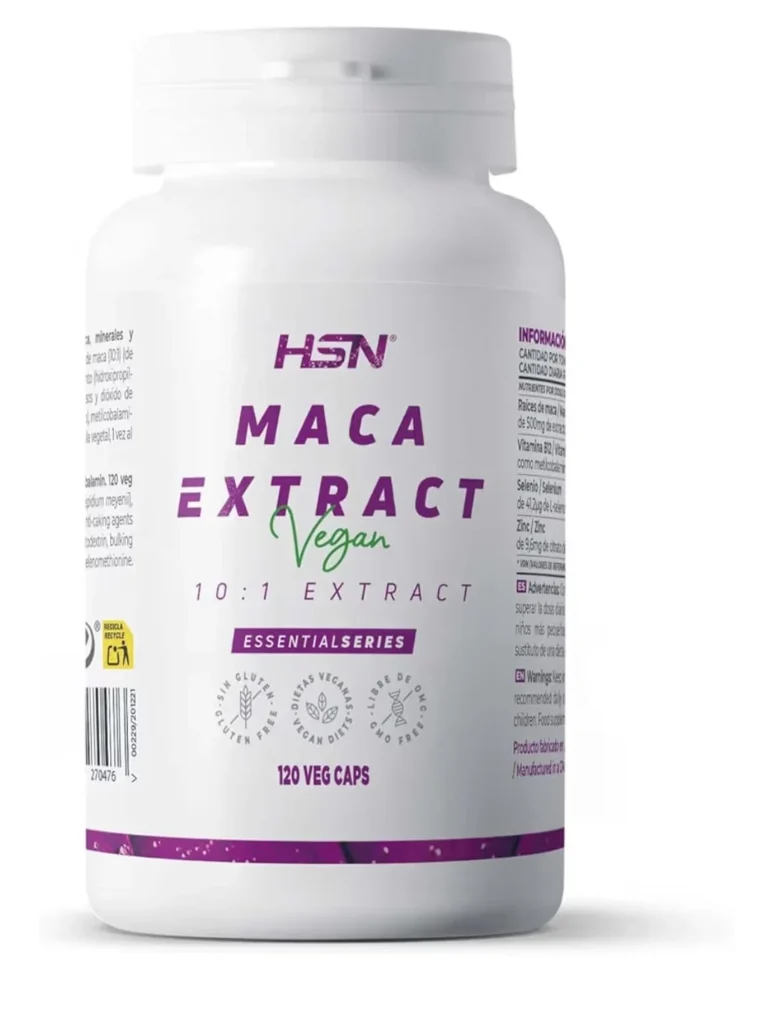
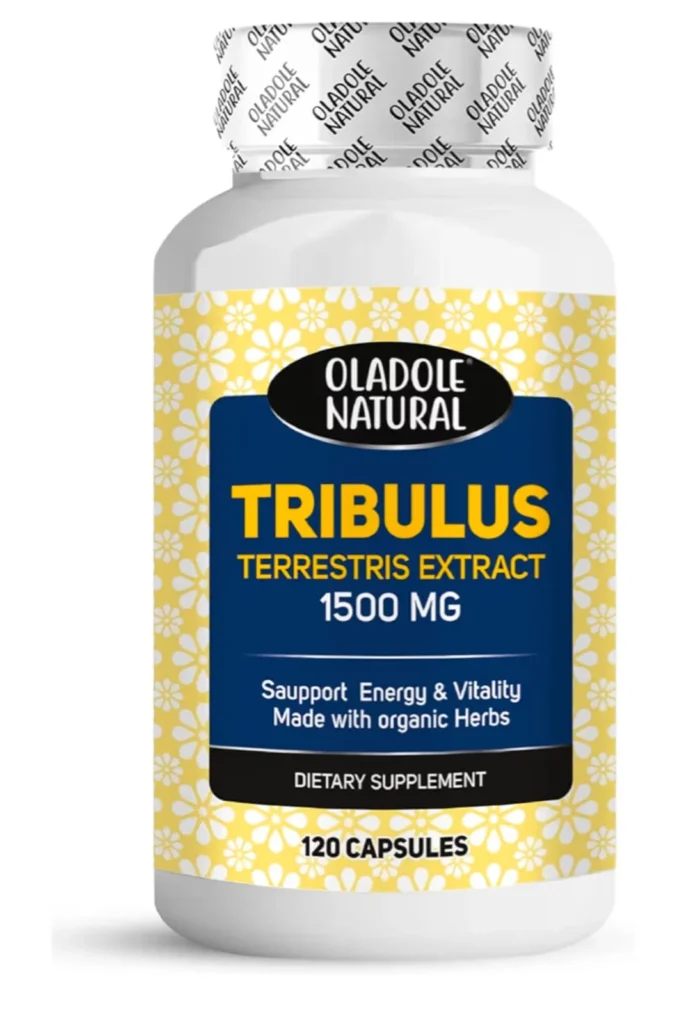
Oladole Natural Tribulus Terrestris Extract 1500mg – 120 Capsules | Supports Male Hormonal Balance, Stamina,Libido Enhancement,Boost Energy,Vitality,Urinary Tract Health | Non-GMO, Gluten Free